
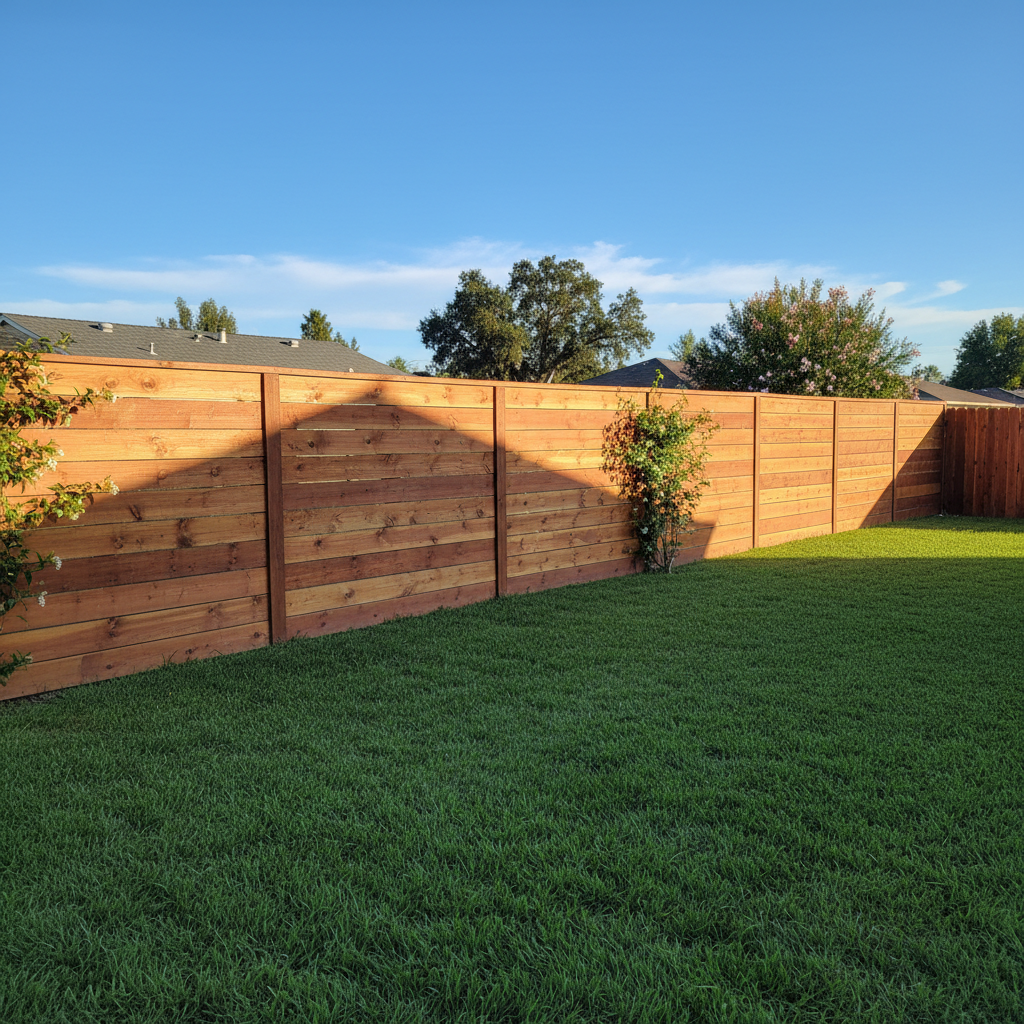
Discover the best stains, sealers, and paints for wood fences in Vacaville, CA. Learn how to protect your fence from the Central Valley heat, UV rays, and seasonal rain.
Vacaville's Central Valley climate is tough on wood fences. Hot, dry summers regularly push temperatures above 95°F, UV rays are intense, and the brief rainy season brings moisture that can warp and crack unprotected wood. Choosing the right fence finish isn't just about curb appeal — it's the single most important factor in how long your wood fence lasts. This guide covers the best finish types for Vacaville homeowners, what to look for in each, and how to apply them correctly.
Why Vacaville's Climate Demands the Right Wood Fence Finish
Vacaville sits at the edge of the Sacramento Valley and the Coast Range foothills, giving it a hot-summer Mediterranean climate (Köppen BSk/Csa). That means long stretches of direct sun from May through October, low humidity that dries and splits wood, and enough winter rain to introduce moisture-related rot if your wood isn't protected. An untreated redwood or pine fence in Vacaville can begin to gray and crack within a single season. The right finish locks out moisture, blocks UV degradation, and keeps the wood from expanding and contracting excessively with temperature swings.
1. Penetrating Wood Stains (Best Overall for Vacaville)
Penetrating oil-based or water-based stains are widely considered the best finish for wood fences in hot, sunny climates like Vacaville's. Unlike paints, stains soak into the wood fibers rather than forming a surface film, so they never peel or bubble — a major advantage in intense UV conditions. Semi-transparent stains enhance the natural grain of the wood while still providing meaningful UV and moisture protection. Solid-color stains offer the most UV blockage of any stain type while still allowing some wood texture to show.
- Oil-based penetrating stains offer deep wood penetration and excellent moisture resistance — ideal for aged or rough-sawn fence boards
- Water-based penetrating stains dry faster, have lower VOCs (important for Solano County air quality regulations), and clean up with water
- Semi-transparent stains are best if you want to show off the natural beauty of redwood or cedar
- Solid-color stains are best for fences with weathered or inconsistent wood that you want to unify in appearance
- Expected reapplication interval in Vacaville: every 2–4 years depending on sun exposure and wood species
2. Clear Water Repellents and Sealers
Clear sealers and water repellents preserve the natural color of fresh wood and form a barrier against moisture infiltration. They're a popular choice for homeowners who want a natural, unfinished look. However, clear finishes offer minimal UV protection — in Vacaville's intense summer sun, wood finished with a clear sealer alone will still gray out within one to two seasons. For best results, look for a clear sealer that includes UV inhibitors, or plan to apply a stain with UV blockers instead. Clear sealers work best as a base coat under a stain, or on covered structures where direct sun exposure is limited.
3. Exterior Wood Paint
Exterior paint provides the most complete coverage and the widest range of color options. It creates a film on the surface of the wood that blocks both UV rays and moisture. However, painted fences in Vacaville require significantly more maintenance over time. As wood expands and contracts with the extreme temperature swings between summer days and winter nights, paint is prone to cracking, bubbling, and peeling — especially on thin fence boards. When paint fails, water gets behind the film and accelerates rot and mold. If you choose paint, use a 100% acrylic latex exterior paint with a built-in primer, and plan to repaint every 5–7 years with thorough prep (sanding, priming bare spots) each time.
- Best wood species for painted fences: smooth, tight-grained woods like Douglas fir or treated pine
- Avoid painting rough redwood or cedar — paint adheres poorly and peels faster
- Always prime bare or repaired wood before topcoating
- Light colors reflect heat and reduce thermal expansion, extending the life of the finish
- Expected reapplication interval in Vacaville: every 5–7 years with annual touch-ups
4. Semi-Transparent vs. Solid Stains: Which Is Right for Your Fence?
Choosing between a semi-transparent and solid stain comes down to the condition of your wood and how much grain you want to show. Semi-transparent stains are ideal for new or good-condition fences where the wood grain is attractive and uniform — they enhance the natural look while adding real protection. Solid stains are better for older fences with weathering, discoloration, or inconsistent boards, because they hide imperfections while still penetrating the wood better than paint. In Vacaville's climate, solid stains with built-in mildewcides are a smart choice since they resist the mold that can develop during wet winters.
Best Wood Species and Finish Pairings for Vacaville Fences
The wood species your fence is made from affects which finish will perform best. Redwood and cedar, the most common fence woods in Northern California, are naturally rot-resistant and take oil-based penetrating stains exceptionally well. Pressure-treated pine is less expensive but denser and requires a finish that can flex with significant temperature movement — water-based solid stains and exterior acrylics work well. Douglas fir is another common option that accepts both stains and paint readily but benefits from a primer coat first.
- Redwood: Best with oil-based semi-transparent or solid penetrating stain; its natural oils resist moisture without heavy finishing
- Cedar: Best with water-based or oil-based semi-transparent stain to enhance its warm tone; similar natural resistance to redwood
- Pressure-treated pine: Best with a water-based solid stain or acrylic exterior paint; allow new PT lumber to dry 3–6 months before finishing
- Douglas fir: Best with a high-quality exterior primer followed by acrylic paint or solid stain
How to Prep Your Fence Before Applying Any Finish
Proper preparation is more important than product selection. Even the best fence stain will fail quickly if applied to dirty, gray, or wet wood. Start by cleaning the fence with a wood cleaner or brightener designed for exterior use — these open the wood grain and remove the gray oxidation that blocks penetration. For older fences with existing finish, a pressure washer on a low setting (800–1200 PSI) can strip loose material without damaging the wood. Allow the fence to dry completely — at least 48–72 hours in Vacaville's summer heat — before applying any finish. Apply in the early morning or evening to avoid direct sun, which causes stain to dry too quickly and streak.
Frequently Asked Questions About Wood Fence Finishes in Vacaville
How often should I refinish my wood fence in Vacaville?
In Vacaville's climate, penetrating stains should be reapplied every 2–4 years, paint every 5–7 years, and clear sealers every 1–2 years. Fences on south- or west-facing sides of a property face more direct sun and will need refinishing on the shorter end of those ranges.
What is the best fence stain brand for hot California climates?
Brands consistently recommended for hot, UV-intense climates include Armstrong Clark, TWP (Total Wood Preservative), Defy Extreme, and Ready Seal. These products offer strong UV inhibitors and deep penetration suitable for Vacaville's summer conditions. Always follow manufacturer instructions for application temperature — most stains should not be applied when surfaces exceed 90°F.
Can I stain a fence that was previously painted?
A penetrating stain cannot soak into wood that has an intact paint film. If your fence is painted, you must strip the paint first using a chemical stripper, pressure washer, or sanding before a stain will penetrate. If stripping isn't practical, a solid-color acrylic stain or fresh paint coat applied over a primed surface is a better option.
Does Solano County have any restrictions on fence stain VOCs?
Yes. Solano County is part of the Bay Area Air Quality Management District (BAAQMD), which enforces VOC limits on architectural coatings including stains and paints. Water-based stains and paints typically fall well within compliance limits and are the safer choice if you're uncertain. Check the BAAQMD's current architectural coating rules or look for products labeled 'Low-VOC' or 'Zero-VOC' to be safe.
Quick Comparison: Fence Finish Types for Vacaville Homeowners
- Penetrating oil-based stain — Best UV and moisture protection, never peels, reapply every 2–4 years. Best for redwood and cedar.
- Penetrating water-based stain — Low VOC, fast drying, good protection, reapply every 2–3 years. Best for all wood species.
- Clear sealer with UV inhibitors — Preserves natural look, moderate protection, reapply every 1–2 years. Best for covered or shaded fences.
- Solid-color stain — Hides imperfections, strong protection, reapply every 3–5 years. Best for older or weathered fences.
- Exterior acrylic paint — Most color options, can peel in extreme heat, reapply every 5–7 years. Best for smooth, tight-grained wood.
For most Vacaville homeowners, a quality penetrating semi-transparent or solid stain is the smartest long-term investment. It protects against the region's biggest threats — UV degradation and seasonal moisture — without the peeling and cracking problems that plague painted fences. Prep your wood properly, choose a product rated for direct sun, and you'll easily double or triple the life of your fence compared to leaving it bare.
Get a Free Fence Finishing Estimate in Vacaville
Ready to start your fence project?
Request a free, no-obligation estimate from Hines Iron today.